The war has entered its pressure phase - and the pressure is working.
The war with Iran has reached the strange, dangerous stage where the shooting has slowed but the conflict has not ended.
That is why the word “ceasefire” feels inadequate. It is. There is no peace. It is not even really de-escalation. It is a pressure chamber.
Iran closed the Strait of Hormuz early in the conflict, effectively threatening the global economy through one of the most important energy corridors on earth. The United States answered with a naval blockade of Iranian ports. Now both sides are trying to prove they can tolerate more pain than the other.
But the pain is not evenly distributed.
For the United States, the pain is political and economic: oil prices, gasoline prices, market anxiety, pressure from allies, warnings from analysts, and all the familiar hand-wringing from people who believe every conflict can be solved by giving the hostile regime just enough breathing room to regroup.
For Iran, the pain is existential.
Iran’s economy was already in bad shape before the war. Years of sanctions, corruption, mismanagement, inflation, and internal unrest had weakened the regime from within. The war did not create those problems. It exposed them. Then the blockade began squeezing them all at once.
Analysts have raised their oil forecasts because of the prolonged closure of Hormuz, with Brent crude climbing above $120 a barrel and energy markets now treating the disruption as a long-term problem rather than a brief panic. The Strait of Hormuz normally carries roughly one-fifth of the world’s oil, so the stakes are enormous. But that also tells us something important: Iran’s leverage is the world’s energy anxiety. Trump’s leverage is Iran’s need to survive.
Iran wants the Strait reopened first and the nuclear issue postponed until later. Trump is refusing to let Tehran separate the immediate economic emergency from the larger strategic problem. No nuclear deal, no relief. No relief, no return to normal.
That is not reckless. It is leverage.
For decades, Iran has mastered the art of playing for time. It escalates, negotiates, delays, blames, threatens, and then waits for Western governments to lose their nerve. The regime knows how to turn global anxiety into diplomatic advantage. It knows that oil prices frighten markets. It knows that Western politicians hate prolonged standoffs. It knows that the leaders of Western democracies must face voters. It knows that every day of pressure produces a chorus of experts demanding an “off-ramp.”
But if the United States lifts the blockade before Iran agrees to meaningful nuclear restrictions, Tehran gets exactly what it wants: economic oxygen now, nuclear talks later, and time to rebuild its military and industrial base.
That is business as usual for Iran.
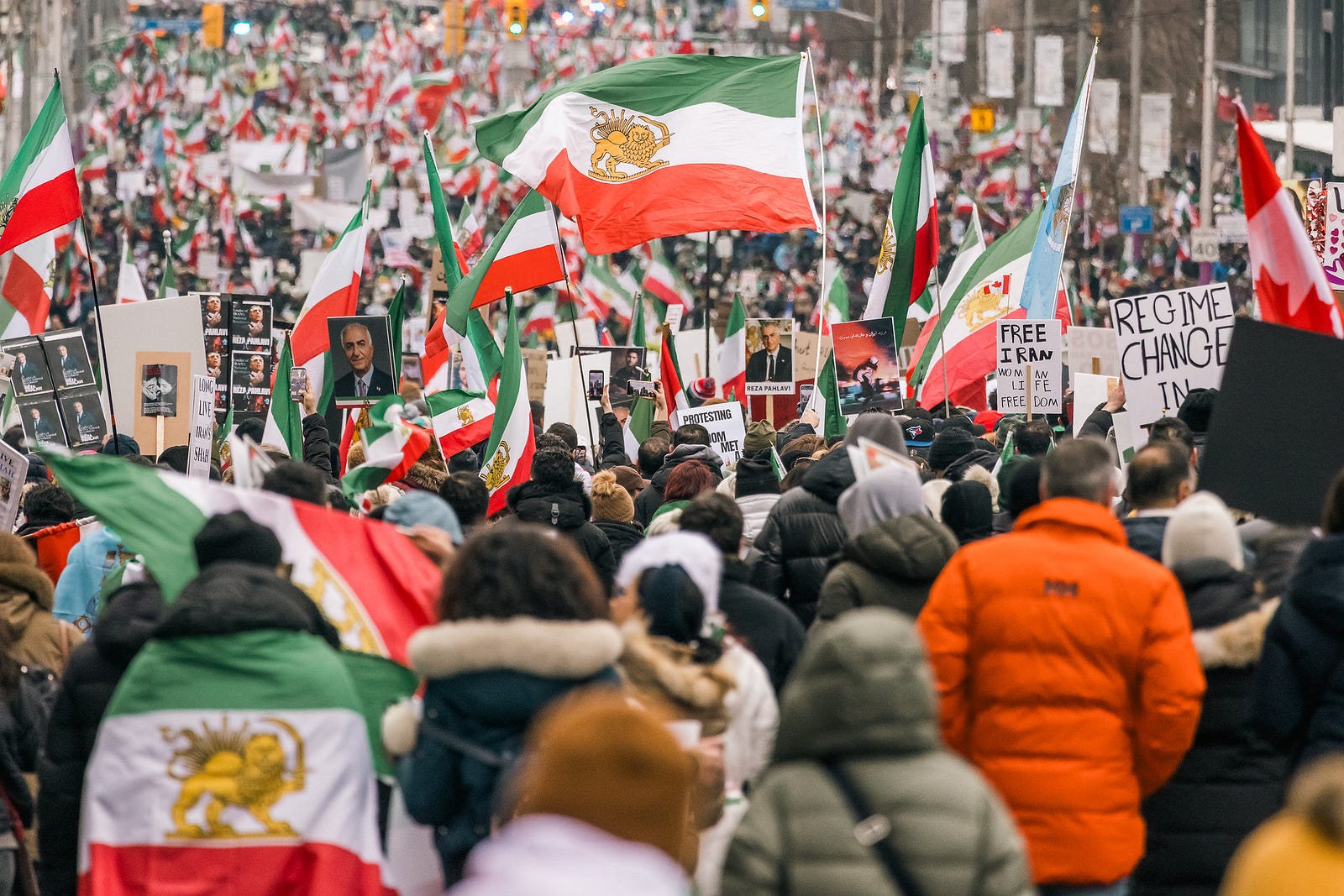
New reports from inside Iran suggest the regime is deeply worried about renewed protests, however. Iran International, an opposition outlet, reported that Iran’s Supreme National Security Council recently met over fears that economic hardship, unemployment, industrial shutdowns, and internet disruptions could trigger another wave of unrest. Critical Threats summarized the same report, noting that Iranian security agencies allegedly assessed that the economy may not withstand more than six to eight weeks of naval blockade.
Maybe the regime doesn’t fall tomorrow. But the clock is ticking down.
The internet shutdown is another sign of regime weakness disguised as strength. Authoritarian governments shut down the internet to stop people from organizing, communicating, documenting abuses, and telling the truth. But Iran’s economy now depends on the internet too. The outages are causing heavy economic damage, with Iranian business figures estimating losses of tens of millions of dollars a day.
So the regime is trapped in a brutal paradox: it needs to keep people disconnected to prevent protests, but disconnecting them destroys livelihoods, angers workers, crushes small businesses, and deepens the very unrest it is trying to prevent.
This is what pressure looks like when it works. Pressure works by narrowing the enemy’s choices until every option becomes bad.
Iran can keep Hormuz restricted and watch its own economy deteriorate. It can reopen the Strait without getting the blockade lifted and lose its best leverage. It can return to nuclear talks from a position of weakness. Or it can escalate and risk another round of U.S. and Israeli strikes.
None of those choices are good for Tehran.
Which is kind of President Trump’s point.
The regime’s public messaging is all defiance. Mojtaba Khamenei has vowed to guard Iran’s nuclear and missile programs and asserted control over the Strait. But defiant statements are cheap. Oil revenue is not. Industrial capacity is not. Public order is not. Regime legitimacy is not.
Iran is trying to convince the world that it can outlast Trump.
It’s true that authoritarian regimes can endure astonishing levels of suffering, especially when ordinary people pay the price and leaders shelter themselves from the consequences. But the reports coming out of Iran suggest that the regime is not nearly as confident behind closed doors as it sounds in public.
The blockade has turned Iran’s favorite weapon — crisis — back on itself.
(Contributing writer, Brooke Bell)